Mop Bucket with Wringer

Best Picks, Types & Buying Guide

The right mop bucket turns floor cleaning from a chore into a fast, repeatable routine — and the wrong one leaves you pushing gray water around and hurting your back. This guide walks through every wringer type, the capacity sizes that actually matter, clean-water versus dirty-water systems, and which setup fits your space, whether that's a kitchen at home or a busy restaurant floor. We compare real brands like Rubbermaid, O-Cedar, Unger, Libman and Simpli-Magic, so you can match a mop bucket with wringer to your floors and check today's price on Amazon without second-guessing. A good mop and bucket with wringer isn't a luxury — it's the difference between a clean floor and a smeared one.

As an Amazon Associate, we earn from qualifying purchases. Prices and availability shown on Amazon change often — always check the current price before you buy.

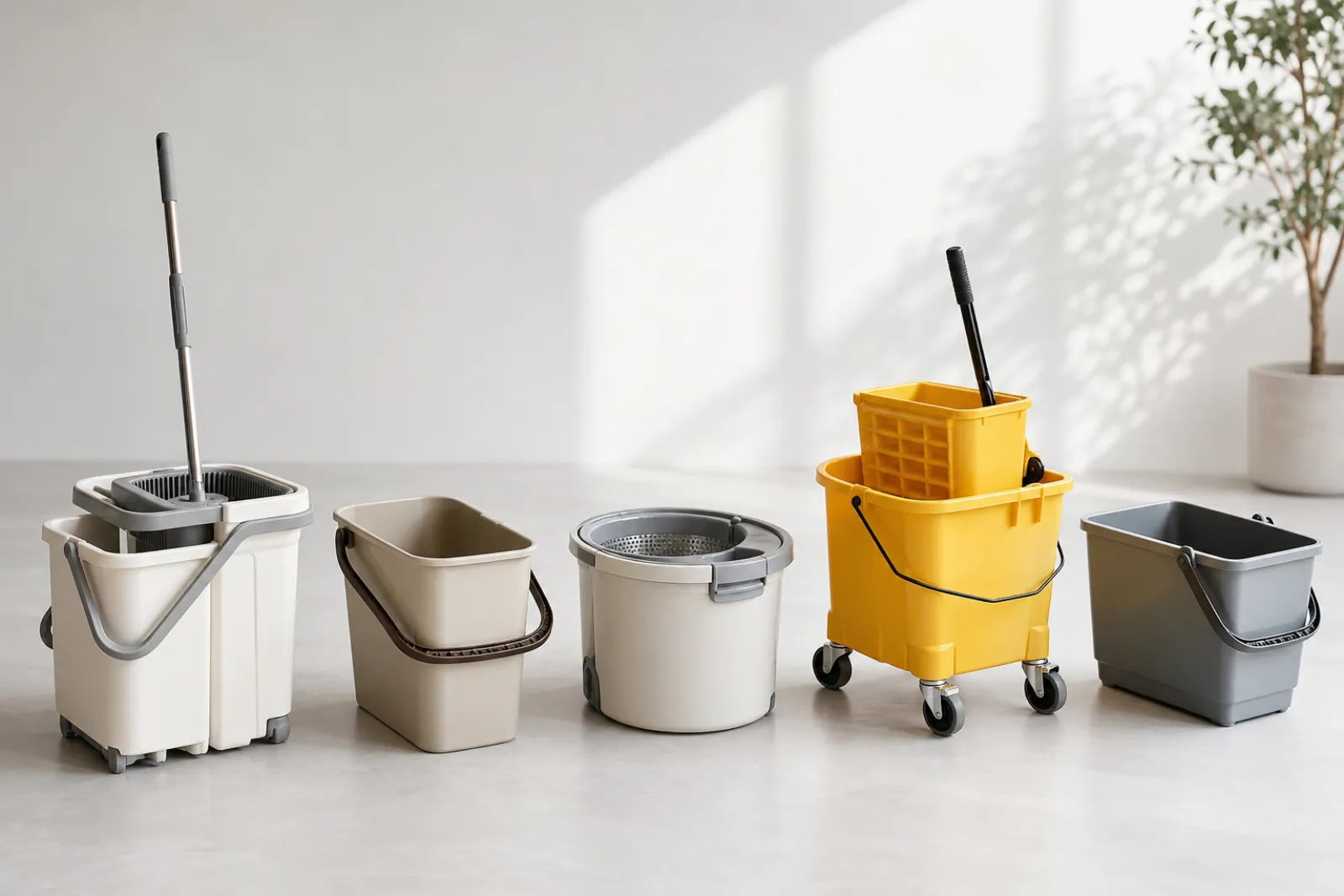
Five top mop bucket picks lined up: commercial side press bucket on wheels, spin mop bucket, flat microfiber mop set, and a 2-pack

Best Mop Bucket Sets: Top 5 Picks with Side Press, Spin & Flat Mop

Short on time? These five picks cover almost every buyer, from a homeowner mopping a small kitchen to a facility manager cleaning a commercial floor at closing. Each one earns its spot for a specific reason, and every link takes you to the current Amazon listing with live ratings and stock.

PickBest forCapacityWringer typeWhy it stands outAction
Commercial side press bucket on wheelsCommercial floor cleaning32–35 qtSide pressHeavy-duty commercial mop bucket that rolls where you need itCheck price
Spin mop and bucket systemHome use3–4 galSpin basketFoot pedal wrings the mop head hands-free; compact for closetsCheck price
Flat floor mop bucket setSealed hardwood & tileLow-profileFlat pressMicrofiber pads leave floors nearly dry — no puddlesCheck price
Microfiber mop bucket setEveryday multi-surfaceMidFlat pressReusable, washable pads you toss in the laundry, not the trashCheck price
2 pack commercial bucketMulti-room / two crews26–35 qtWringer comboTwo buckets so clean and dirty jobs never share waterCheck price

A quick read on the field: the commercial mop bucket with side press wringer is the workhorse most professionals reach for. The spin mop and bucket wins at home because the basket does the wringing for you. Flat and microfiber mop systems are the smart call on sealed wood, where excess water is the enemy. And a 2 pack commercial bucket is the budget-smart move if you want one for general floors and one held back for restrooms.

Amazon ratings and prices shift daily. The fastest way to compare these mop bucket sets is to open each one and check the price and star count as they stand today.

Expert tip: Buy for your worst-case job, not your average one. A bucket that handles your biggest floor still works fine on a small one — but a too-small pail means constant refills.

Mop Bucket Wringer Types: Side Press vs. Down Press vs. Spin vs. Flat Mop

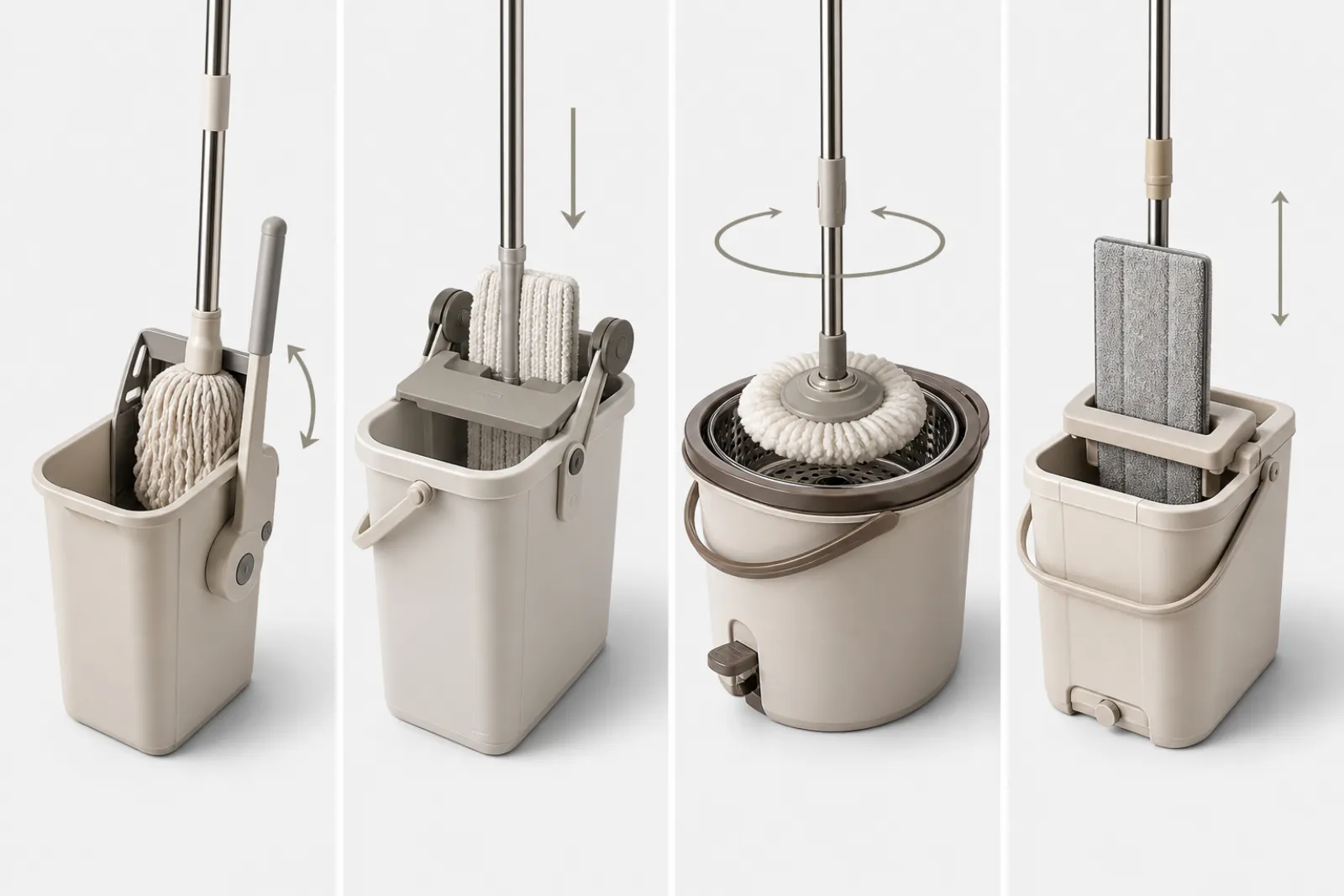
This is where most shoppers get stuck, because almost no retailer explains how the four common wringer types actually differ. The wringer is the part that squeezes water out of the mop head, and the mechanism you choose decides how wet the floor gets, how hard your hands work, and how much back strain you feel by the end of a shift. Here's how each wringer system works and where it fits.

Side-by-side diagram of four wringer mechanisms: side press lever, down press top plate, spin basket, and flat mop press

Side Press Wringer Bucket: Best for Commercial Floor Cleaning

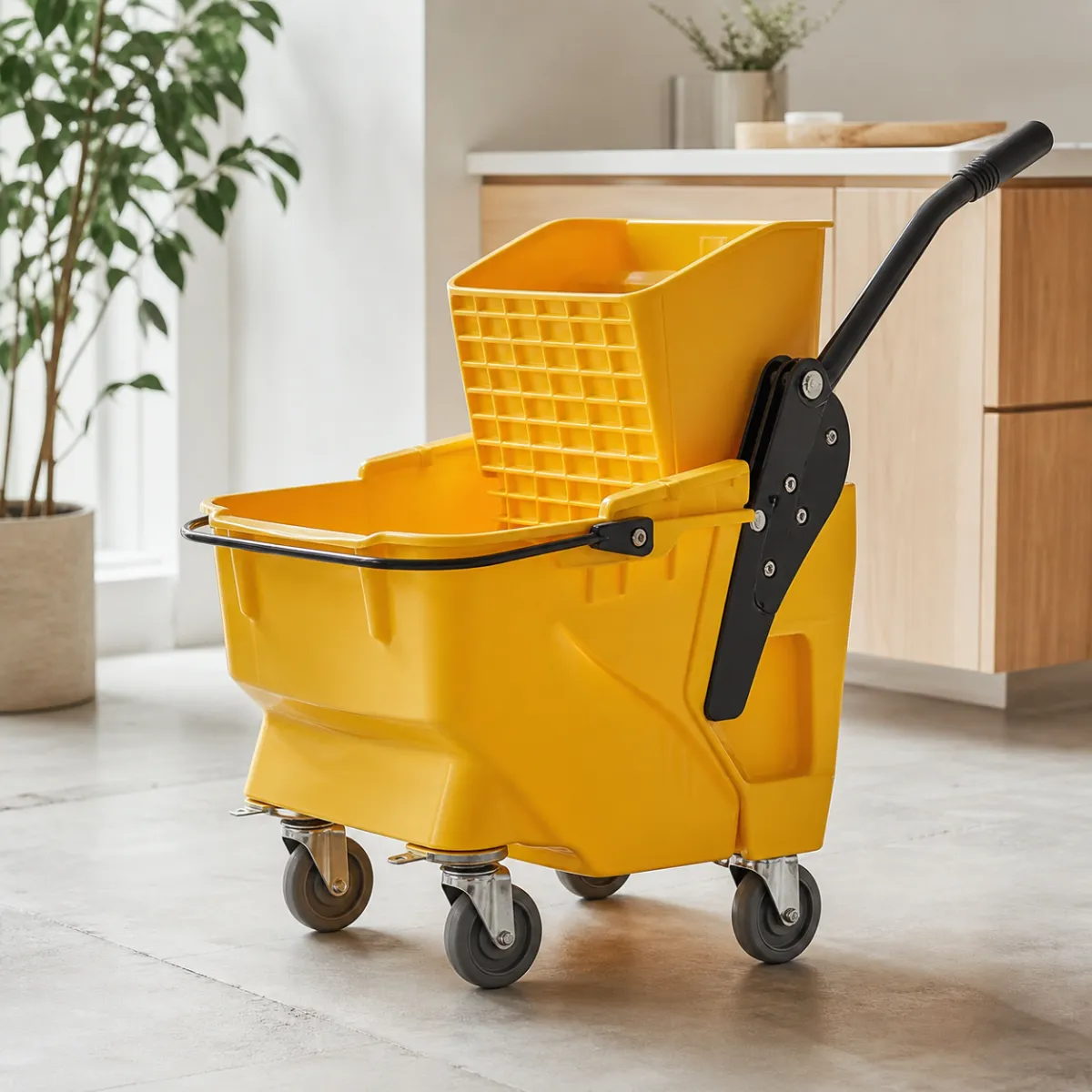
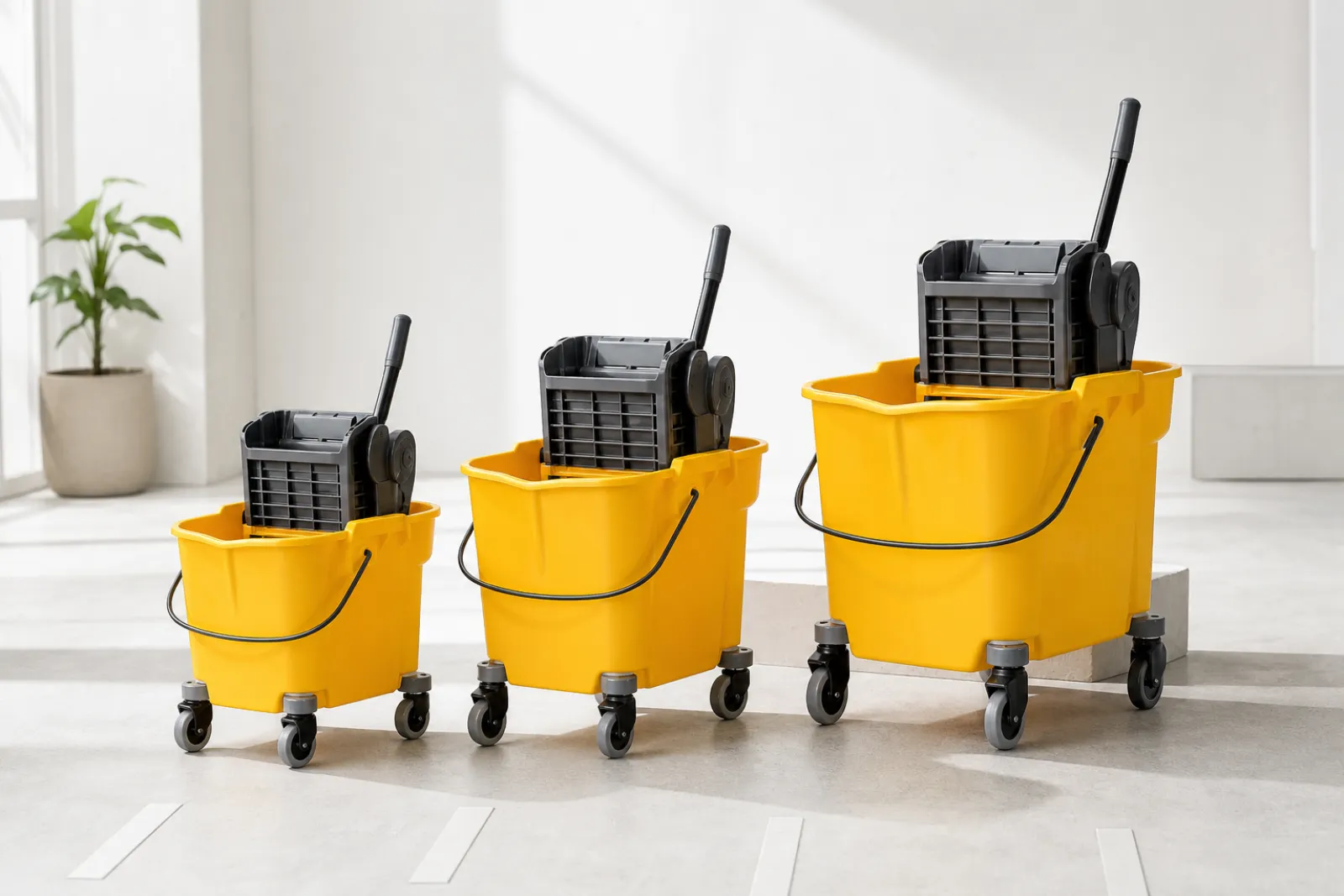
A side press wringer sits on the side of the bucket. You lay the mop head in the funnel, push the lever down, and a hinged plate presses the water out to the side. It's the most common design in commercial settings for a reason: you wring one-handed while the other hand stays on the handle, and the lever gives you plenty of leverage without bending over. A bucket with side press wringer also keeps dirty water flowing back into the pail instead of onto your shoes. If you're cleaning a commercial floor day after day, a mop bucket with side press wringer is the safe default — and a side press wringer combo commercial mop setup is what you'll see in most janitor closets.
Down Press Wringer System: Heavy-Duty Janitorial Use

A down press (sometimes called a top press) works by pushing straight down on the mop head from above. That vertical motion generates more force than a side lever, so it squeezes string mops drier — useful for heavy-duty janitorial work with thick cotton mops that hold a lot of water. The trade-off is that you press downward, which some people find harder on the shoulders over a long shift. For industrial-grade wringing power on big commercial jobs, though, down press is tough to beat.

Spin Mop and Bucket: Compact Home and Kitchen Option

The spin mop and bucket is the home favorite. Instead of a lever, the bucket has a perforated inner basket; you drop the mop head in, press a foot pedal (or push down on the handle), and centrifugal spin flings the water out. No bending, no wet hands, and the whole thing is compact enough to tuck under a sink or in a kitchen closet. It won't match a commercial rig on capacity, but for everyday floors it's fast, light, and genuinely easy to use.

Flat Mop Wringer System with Auto-Spray Cleaning

A flat mop pairs a rectangular pad with a low bucket that presses or rolls the water out of a microfiber pad. Some newer kits skip the bucket entirely with auto-spray cleaning — a refillable handle that mists solution ahead of the pad. Either way you scrub with very little water, which is exactly what sealed hardwood and laminate need. If your floors can't take a soaking, a flat mop system is the gentle, controlled way to wring and go.

Not sure which mechanism is yours? Match the wringer to the job — commercial floors to side or down press, homes to spin, delicate floors to flat — then check current pricing on the type that fits.

Mop Bucket Capacity Guide: 26 Qt, 35 Qt & 36 Quart Sizes Explained

Capacity is the spec people underestimate most. Too small and you refill constantly; too large and you're hauling a heavy, sloshing pail around a tiny apartment. Quart size maps directly to how much floor you can cover before the water turns gray, so pick by your space, not by what looks impressive.

Three mop buckets at 26, 32, and 35-36 quart sizes shown at scale with gallon equivalents and floor-area coverage labels

Commercial Mop Bucket on Wheels: 35–36 Quart Heavy-Duty Volume

A 35 quart or 36 quart bucket is full commercial territory. That's roughly 8.75 to 9 gallons of water — enough to mop a large restaurant floor, a gym, or a retail space without stopping to refill every few minutes. At that volume you want a commercial mop bucket on wheels, because a full 36 quart pail is heavy. Sturdy casters and a bucket with wheels let you roll it across the floor instead of lifting, which saves your back and your time.

Compact 26 Quart Mop Bucket for Home, Kitchen & Small Spaces

A 26 quart bucket hits the sweet spot for homes, apartments, and small kitchen jobs. It holds enough water for a few rooms, stays light enough to carry and empty in the sink, and stores without eating a whole closet. If you're mopping a house rather than a warehouse, compact 26-quart is almost always the right call. A 32 quart sits in the middle — good for larger homes or light commercial work like a small office.

Gallon Equivalents and Floor Area Coverage per Bucket Size

Here's a rough field guide in gallon terms. A 26 quart bucket (about 6.5 gallons) comfortably covers a typical home floor plan on one fill. A 32 quart (8 gallons) stretches to a big house or a light commercial space. A 35–36 quart (roughly 9 gallons) is built for full commercial square footage — think restaurant, hospital corridor, or large retail. Change the water when it looks dirty regardless of size; coverage numbers assume you're mopping normal soil, not a flood.

Once you know your square footage, the quart size sorts itself out. Pick the range that matches your floor and check its price on Amazon.

Clean Water vs. Dirty Water Separation: Dual-Tank Mop Bucket Systems

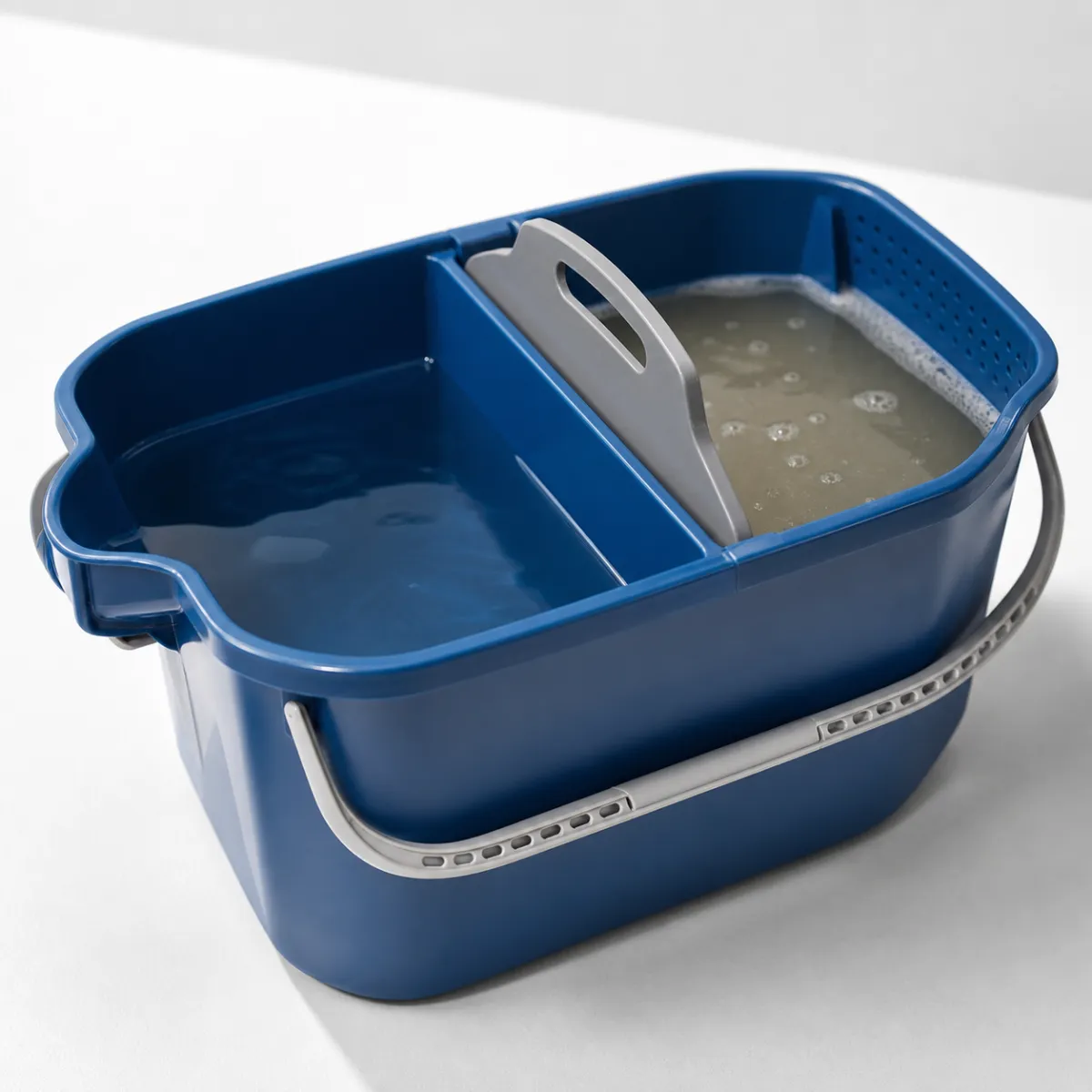
Here's the problem no one mentions with a standard single bucket: every time you rinse the mop, you're dunking dirt back into the same water you're about to mop with. By the third rinse you're spreading grime, not removing it. Clean water and dirty water separation solves that, and it's the single biggest upgrade for anyone serious about hygiene.

Cutaway of a dual-tank mop bucket showing a clean water compartment and a separate dirty water compartment with a built-in wringer, splash guard and spout

Dual-Tank Dirty Water Separation Bucket System

A dual-tank system splits the pail into two compartments: one holds clean solution, the other collects the dirty water you wring out. You always dip into clean water and never contaminate it. Some models, like the Unger OmniClean dual bucket, take this further — one tank for rinsing and one for fresh solution — so the mop that touches your floor is genuinely clean, not recycled sludge. That dirty water separation is why professionals in food service and healthcare rely on these systems.

Built-In Wringer Bucket with Splash Guard and Spout

Most quality buckets add a built-in wringer, a splash guard to keep water from sloshing over the rim, and a pour spout so you can empty dirty water down a drain without a mess. The spout matters more than it sounds — tipping a full 35-quart pail without one is how you soak your shoes. Look for a built-in splash guard if you'll be moving the bucket while it's full.

Separate Clean and Dirty Water Mop Sets: When You Need One

Do you actually need to separate clean and dirty water? For a quick kitchen touch-up, a single bucket is fine. But if you're cleaning a hospital, a daycare, or a restaurant kitchen where hygiene is regulated, a separate clean-water setup isn't optional — it's the standard. Hospitals often pair this with color coding so rinse water never crosses between zones. If floor hygiene is the whole point, a dual-tank or two-bucket mop set earns its keep fast. Compare separation systems and check current availability on Amazon.

Commercial vs. Industrial Mop Bucket Material Comparison

The plastic (or steel) your bucket is made from decides how long it lasts and how much abuse it takes. A commercial mop bucket used daily needs to survive knocks, chemicals, and hot water without cracking. Here's how the common materials stack up.

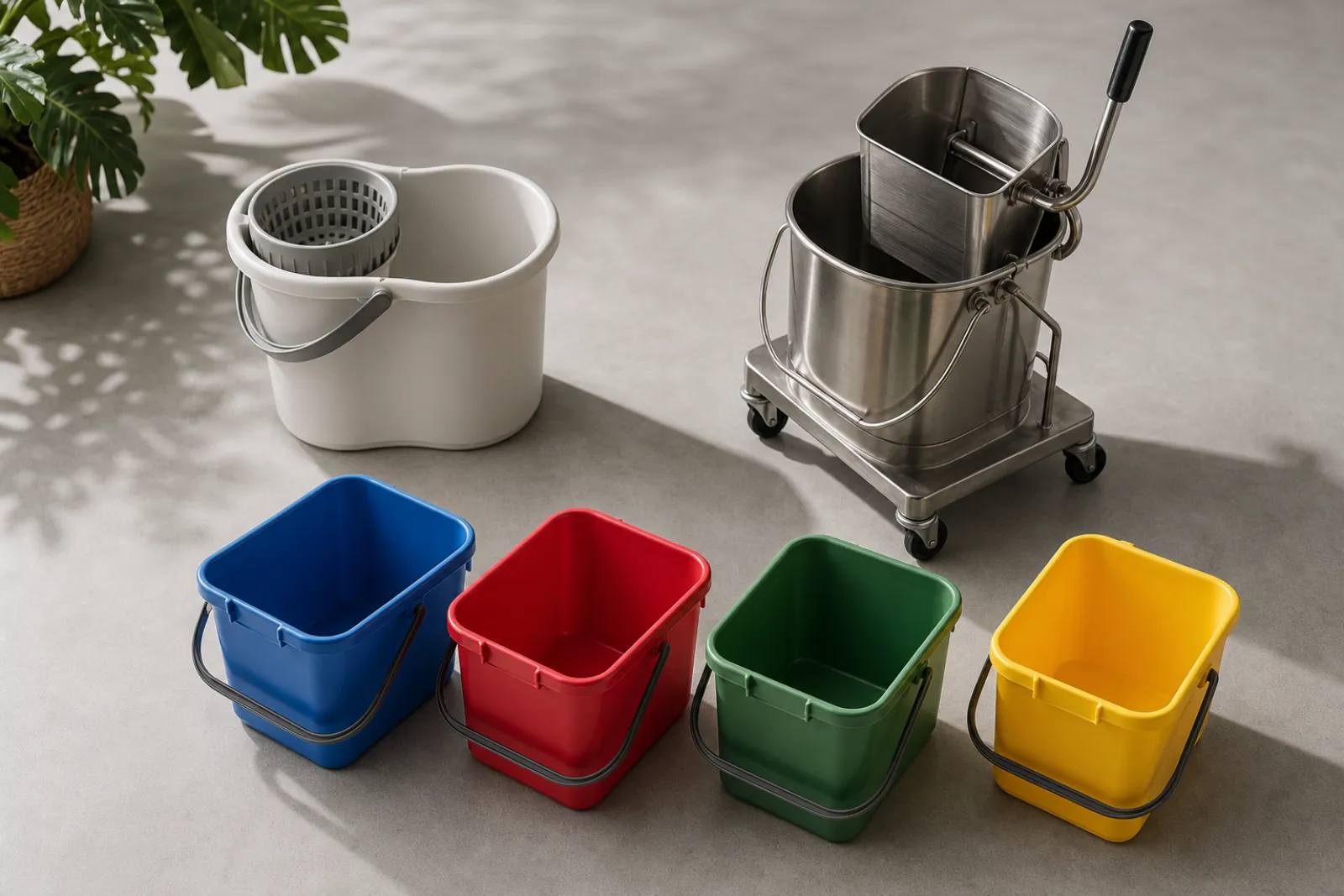
Material comparison showing polypropylene, polyethylene and stainless steel handle buckets plus a color-coded set in blue, red, green and yellow

Polypropylene vs. Polyethylene Mop Bucket: Durable Plastic Options

Most buckets are one of two plastics. Polypropylene is lightweight, affordable, and resists most cleaning chemicals — a great all-round choice for a durable everyday bucket. Polyethylene is heavier and more impact-resistant, so it shrugs off drops and rough handling better, which is why you see it on heavy-duty commercial models. Both are durable if the wall thickness is decent; thin, flimsy plastic is the thing to avoid regardless of the type name on the label.

Stainless Steel Handle Mop Bucket for Heavy-Duty Commercial Use

Step up to a stainless steel handle (or a fully stainless frame) and you're in premium, heavy-duty territory. Stainless resists rust and takes a beating, which is why food service and industrial mop operations pay for it. A galvanized steel or stainless frame with a plastic bucket insert is a common commercial compromise: metal strength where it counts, easy-clean plastic where it touches water.

Color-Coded Janitorial Mop Bucket System: Kitchen, Hospital & General

Color coding is a janitorial standard that home buyers rarely hear about, and it's genuinely useful. Under common HACCP-style schemes, blue is general-purpose, red is reserved for restrooms and high-risk areas, and green or yellow marks the kitchen. Keeping a dedicated bucket per zone stops cross-contamination cold — the restroom bucket never touches the kitchen floor. Even at home, a two-color pair (one for the bathroom, one for everywhere else) is a cheap hygiene win. Match the material and color system to your setting, then check the price on the grade you need.

Mop Bucket Use-Case Guide: Restaurant, Kitchen, Home & Floor Type Selection

No competitor lays this out, so here it is plainly: the best bucket depends entirely on where and what you're cleaning. Below are the four scenarios that cover almost everyone.

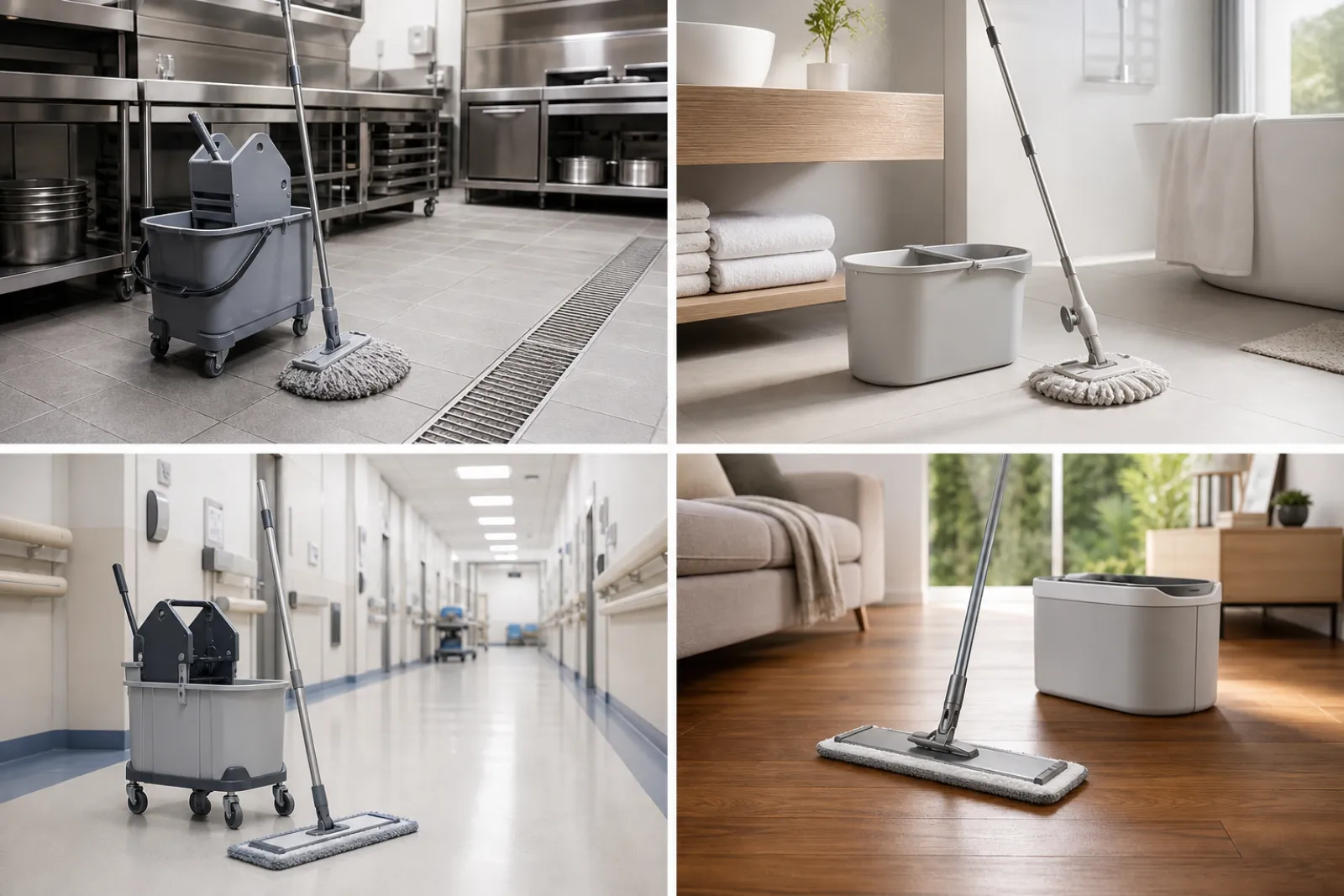
Grid of four cleaning scenarios: restaurant kitchen, home kitchen, healthcare corridor, and hardwood floor, each paired with its recommended bucket
ScenarioRecommended setupWhy
Restaurant / foodservice35–36 qt commercial on wheels, color-coded, side pressHigh volume, hygiene zones, long shifts
HomeSpin mop or 26 qt flat mopCompact, light, easy to store and empty
HealthcareDual-bucket with clean water separationHygiene is regulated; no recycled dirty water
Hardwood / laminateMicrofiber flat mop, minimal waterSealed floors can't take a soaking

Foodservice & Restaurant Kitchen Floor Cleaning Bucket

A restaurant kitchen is the toughest floor-cleaning job most people face: grease, high traffic, and health-code scrutiny. Go big with a 35–36 quart commercial bucket on wheels, color code it (yellow or green for the kitchen), and use a side press wringer so staff can work fast without bending. Foodservice floors get mopped many times a day, so durability and easy dirty-water dumping matter more than a low price.

Hardwood, Laminate & Tile Floor Mop Bucket Selection

Floor type drives the choice as much as the room does. Hardwood and laminate hate standing water — it seeps into seams and warps the surface — so a microfiber flat mop that leaves the floor almost dry is the safe pick. Tile and vinyl are far more forgiving and handle a wetter mop and a scrub as needed. Knowing your floor types before you buy saves you from ruining a nice hardwood floor with the wrong tool.

Home Floor Cleaning: Compact and Microfiber Mop System

For everyday home floor cleaning, a spin mop or a compact microfiber mop system does the job with the least fuss. It's light, it stores small, and the washable pads mean no constant restocking. Most homes don't need commercial volume — they need something quick to grab, easy to wring, and simple to put away.

High-Efficiency Cleaning for All Floors: Tile, Wall, Window & More

If you want one setup that covers the most ground, a flat microfiber system delivers high-efficiency cleaning for all floors — tile, sealed wood, laminate, vinyl. Some kits even flip to handle a wall or a window with the right pad, so cleaning for all floors, tile to baseboards, runs off one tool. Think of it as cleaning for all floors tile included — and with the right pad, floors tile wall window surfaces can share one microfiber system. It leaves surfaces spotless without a soaking, which is the versatile choice for a mixed-surface home. Whatever your mix of rooms and floors, match the system to the job and check today's Amazon price.

See a Mop Bucket with Wringer in Action

A hands-on comparison of the top 5 mop bucket picks — side press, spin, and flat mop systems tested against real floors.

Mop bucket with wringer demonstration video preview

Mop Bucket Buying Guide: Key Features, Wringer Specs & Ergonomics

Once you've settled on a type and size, a handful of features separate a bucket you'll like from one you'll fight. Run through this checklist before you buy.

Annotated commercial mop bucket highlighting ergonomic side press lever, non-slip grip, wheels, splash guard, spout and included washable pads

Mop Head and Washable Mop Pads Compatibility

Check what the bucket is designed to hold. String mops, cotton mops, and microfiber pads each need a compatible wringer, and a mismatched mop head won't wring properly. Systems with washable mop pads save money and waste over time — you launder and reuse them instead of buying replacements. Confirm the mop head style is compatible with the wringer before you commit.

Bucket with Side Press Wringer: Ergonomic Grip & Wheel Design

Ergonomics is the feature almost no seller talks about, and it's the one your back will thank you for. A bucket with side press wringer that has a padded, non-slip grip and a lever placed at a natural height means you wring without hunching. Pair that with a smooth wheel design — quality casters that roll instead of stick — and you glide the bucket across the room instead of dragging it. Over a full cleaning session, good ergonomics is the difference between finishing fresh and finishing sore. A cleaner who mops floors all day feels every gram of that leverage, which is why a side press wringer commercial mop setup — a proper press wringer commercial mop bucket — earns its place in professional kits.

Collapsible and Foldable Mop Bucket for Small Spaces

Tight on storage? A collapsible mop bucket folds flat when empty, so it slides behind a door or into a narrow closet. Foldable designs are ideal for apartments and RVs where a rigid pail wastes space. You give up some rugged durability, but for a home buyer with a small closet, a foldable bucket is a smart trade.

Wet Floor Caution Sign and 3x Washable Pads Included Sets

Some sets bundle extras worth having. A kit including wet floor caution sign gear is a real safety plus if others share the space — kids, guests, or coworkers won't slip on a just-mopped floor. Sets with 3x washable pads included give you a rotation so one's always clean while another's in the wash. Small add-ons, but they save you a separate purchase.

Splash Guard, Spout and Wring Control Features

Finally, the water-handling details: a splash guard keeps the bucket from slopping over when you move it, a spout lets you pour dirty water out cleanly, and good wring control means you decide how wet or dry the mop comes out. Together these features let you remove more water with less mess. Tick off the features that matter for your space, then check the current price on a model that has them.

Top Mop Bucket Brands: Unger, Libman, O-Cedar & Commercial Wringer Comparison Table

No competitor puts the major brands side by side, so here's a straight comparison to help you choose. Prices move constantly on Amazon, so use this for fit and features, then check the live price per row.

Brand comparison lineup of Unger, Libman, O-Cedar, Rubbermaid and Simpli-Magic mop buckets with capacity and wringer-type labels
BrandTypical capacityWringer typeMaterialBest forAction
UngerDual-bucketBuilt-inCommercial plasticClean/dirty water separationCheck price
LibmanHome / spinSpin & leverPolypropyleneEveryday home floorsCheck price
O-CedarHomeSpin / flatPlasticSpin mop and flat mop fansCheck price
Rubbermaid31–35 qtSide pressHeavy-duty plasticCommercial janitorialCheck price
Simpli-Magic26–36 qtSide pressPolypropyleneValue commercial + 2-packsCheck price

Unger OmniClean Dual Bucket and Mop System Review

Unger built its reputation on the professional side, and the OmniClean dual bucket and mop system is its standout — a genuine clean-water-versus-dirty-water setup that keeps your rinse and your cleaning solution apart. If separation is your priority, Unger is the name to look at first.

Libman vs. O-Cedar Spin Mop Bucket Set Comparison

Libman and O-Cedar are the two big consumer names, and both make solid spin mop bucket sets for the home. O-Cedar's spin and flat systems are widely rated favorites; Libman's buckets and mop-and-bucket sets are sturdy and easy to find. For a home buyer, either brand is a safe bet — compare current ratings and pick the one with the deal today.

Commercial Janitorial Mop Bucket Brands: Side Press Wringer Options

For commercial janitorial work, Rubbermaid and Simpli-Magic lead on side press wringer buckets. Rubbermaid is the industry standard for durability; Simpli-Magic offers strong value and 2-pack options for buyers outfitting more than one space. A wringer combo commercial mop bucket from either brand covers most professional needs.

Mop Bucket FAQ: Types, Sizes, Prices & Alternatives

What is the best mop bucket to buy?

The best mop bucket depends on your space. For a home, a spin mop or compact 26-quart flat mop is easiest. For commercial floors, a 35-quart bucket with a side press wringer on wheels is the standard. Match the type and size to your job, then check current Amazon ratings to pick the top-rated model in that category.

What are the different types of mop buckets available?

The main types are side press (most common commercial), down press (heavy-duty force), spin (home-friendly and compact), and flat mop systems (for sealed floors). They differ mainly in how the wringer squeezes water from the mop head. See the wringer types section above for a full breakdown.

What is a mop bucket called?

A mop bucket is also called a mop pail, a wringer bucket, or — when it's on wheels with a wringer attached — a mop bucket cart. Commercial catalogs often list it as a "bucket with wringer" or a "mop and bucket set." They all describe the same tool.

Why are mop buckets so expensive?

Commercial buckets cost more because of what's inside them. A heavy-duty wringer mechanism, thick impact-resistant plastic or a stainless steel handle, quality casters, and a splash guard all add up. You're paying for a tool built to survive daily professional use, not a light-duty home bucket. Budget models exist — just check the price range that matches how hard you'll use it.

What can I use instead of a mop bucket?

In a pinch, any large pail, a deep sink, or a plastic tub works to hold and rinse water. What you lose is the wringer — you'll be wringing the mop by hand, which is messier and leaves the floor wetter. For occasional light cleaning that's fine; for regular mopping, a proper bucket with a wringer pays for itself in comfort.

What size mop bucket is best for a restaurant kitchen?

A restaurant kitchen wants a 35–36 quart commercial bucket. That volume covers a busy foodservice floor without constant refills, and a color-coded, wheeled model with a side press wringer keeps hygiene zones separate and cleaning fast.

Are there mop buckets that separate clean and dirty water?

Yes. Dual-tank systems keep clean solution in one compartment and collected dirty water in another, so you never mop with contaminated water. The Unger OmniClean dual bucket is a well-known example. These are the go-to for hospitals, daycares, and food service.

What is the difference between side press and down press wringers?

A side press wrings the mop with a lever on the side of the bucket — easy one-handed use and the commercial default. A down press pushes straight down from the top, generating more force to squeeze thick string mops drier. Side press is easier on most people; down press wrings harder for heavy-duty jobs.

Do mop buckets come with splash guards, a spout or a wet floor caution sign?

Many do. Better commercial buckets include a splash guard and a pour spout as standard, and some home sets bundle a wet floor caution sign and extra pads. Check the listing's included-items list — a set with 3x washable pads and a caution sign saves separate purchases.

Can I buy replacement wringers and washable mop pads separately?

Usually, yes — especially for common commercial brands like Rubbermaid. Replacement wringers, mop heads, and washable mop pads are often sold on their own, so you can refresh the worn part instead of replacing the whole set. Confirm the replacement is compatible with your specific bucket model before ordering.

Shop Mop Bucket with Wringer: Check Price on Amazon

You've got the full picture now — pick the setup that matches your floors and how hard you'll work it. Here's the short version for each buyer.

Commercial side press mop bucket on wheels with ergonomic lever, wheels and splash guard

Commercial Mop Bucket on Wheels — Best Side Press Wringer Deals

Cleaning commercial floors? Go with a 35-quart commercial mop bucket on wheels and a side press wringer — Rubbermaid or Simpli-Magic are the safe, top-rated picks. Check price on the current best-rated models.

Check price
Home spin mop and bucket set alongside compact bucket sizes

Spin Mop and Bucket Sets — Home Floor Cleaning Picks

Mopping at home? A spin mop and bucket from O-Cedar or Libman, or a compact microfiber flat mop, does the job with the least effort and stores easily. Check price and compare today's ratings.

Check price

Amazon prices and stock change throughout the day, and top picks sell out — so open the listing that fits your space and check the price and availability right now.

Check price